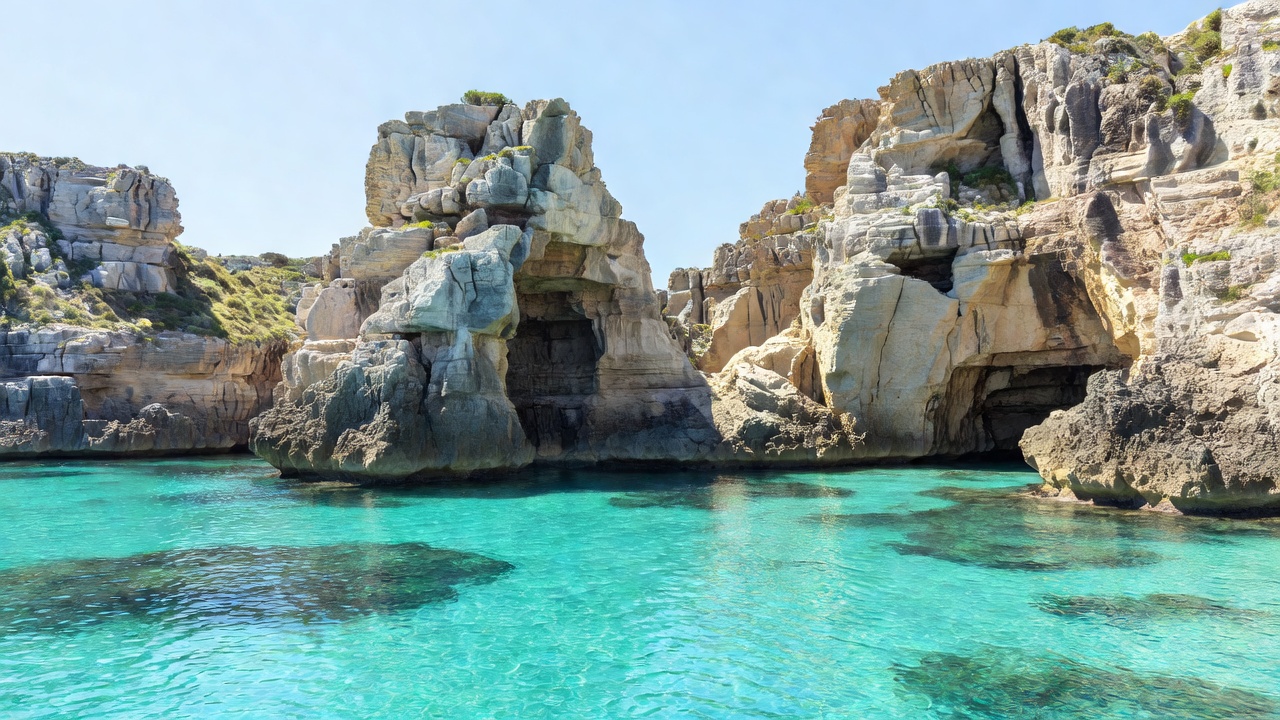
Official Characterization: In Spain’s official tourism literature, Cala Macarella is celebrated as a white-sand beach protected by cliffs, with calm waters and a relatively isolated setting. The towering lateral rocks directly foster the mirror-like stillness of its marine waters.
The Optical Science of Turquoise Waters
Visitors gazing upon Cala Macarella frequently comment on an optical illusion: boats anchored across the cove appear to hover suspended in mid-air, casting crisp shadows onto the seabed below. This extraordinary transparency is the result of three harmonious environmental factors:
- Oligotrophic Purity: The water column possesses remarkably low levels of suspended nutrients and silt, preventing murky algal blooms.
- Carbonate Reflectance: The seabed consists of uniformly clean, pale calcium-carbonate sands that reflect ambient sunlight back toward the surface.
- Posidonia Filtration: Vast underwater meadows of Posidonia oceanica oxygenate the bay while trapping fine sediment particles before wave action can suspend them.
Water temperatures begin around 19°C in late May, rising to a pleasant 24°C to 26°C during mid-summer, before cooling gently to 21°C by late October. Because the cove is deep and protected, surface currents remain exceptionally mild under standard summer weather patterns.
Geology of the Surrounding Limestone Cliffs
The cliffs that frame Cala Macarella are geological monuments dating back roughly 10 to 15 million years to the Upper Miocene epoch. Composed primarily of bioclastic calcarenite—a warm-toned sedimentary limestone formed by compacted marine fossils—these vertical walls reach heights between 25 and 32 metres on either side of the entrance.
Over millennia, karstic dissolution has weathered the cliff faces, carving small fissures, recesses, and prehistoric sea caves. Historically, early Mediterranean inhabitants and local fishermen carved small shelter niches and storage recesses into the softer limestone strata, remnants of which can still be observed along the western cliff footings.
Swimming & Snorkeling Safety
The swimming area is demarcated by regulatory seasonal buoy lines to prevent motorized watercraft from encroaching near bathers. Snorkelers will find abundant marine life—including saddled seabream, damselfish, and painted combers—congregating near the cliff bases.
Cliff Cliff-Jumping Warnings
Climbing or jumping from the vertical limestone ledges is strictly prohibited. Submerged rocky shelves and variable water depths beneath the rock faces present severe injury risks, and the fragile rock can fracture unexpectedly.
The Sister Cove: Exploring Cala Macarelleta
No discussion of Macarella is complete without highlighting its intimate sibling, Cala Macarelleta. Tucked just 500 metres to the west in an adjoining rocky cove, Macarelleta is an even smaller, more enclosed natural sanctuary.
With a shoreline span of merely 45 metres, Macarelleta feels intensely secluded. The sand shares identical powdery white carbonate characteristics, and the water is equally vibrant. Because of its sheltered, discrete topography, Macarelleta has a long-standing historical tradition of naturism, where bathers coexist respectfully with the surrounding natural elements.
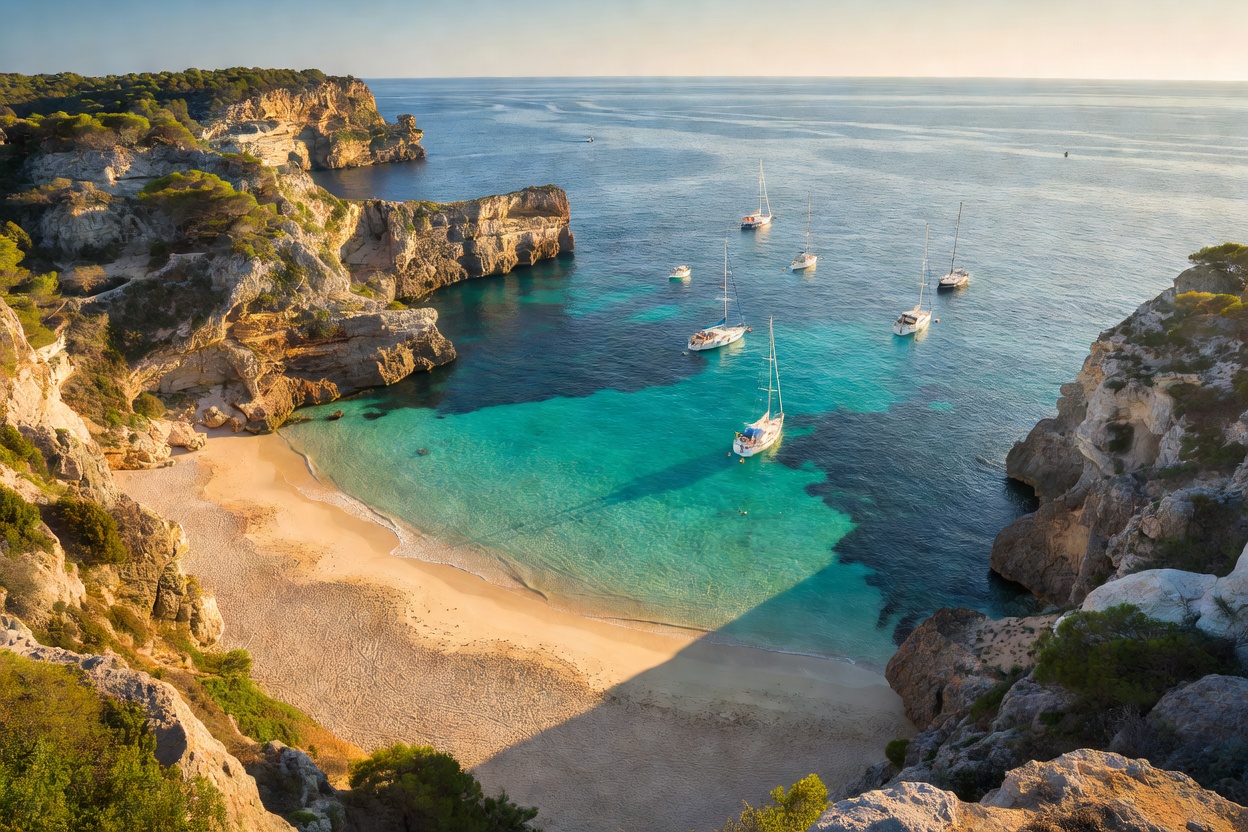
Connecting the Coves: The Scenic Cliffside Footpath
Visitors wishing to travel between Cala Macarella and Cala Macarelleta have two choices: a swim across the clear bay (requiring confidence and buoyancy for roughly 400 metres) or the breathtaking cliffside walking trail carved into the rocky ridge between the two calas.
The overland path takes approximately 10 to 15 minutes to traverse. Carved directly into the limestone surface and bordered by wooden handrails in steeper sections, the trail ascends the western wall of Macarella before dropping into Macarelleta.
| Feature | Cala Macarella | Cala Macarelleta |
|---|---|---|
| Water Basin Depth | 2 to 6 metres across bay | 1.5 to 4.5 metres near shore |
| Wind Shelter | Strong protection from N, NE, NW | Extreme enclosure on all sides |
| Cliff Characteristics | Wide amphitheater, pine topped | Vertical rock cleft with fissures |
| Bather Capacity | Moderate capacity | Intimate, fills early in day |
| Direct Facility Access | Immediate proximity to trail head | Zero facilities; total wild cove |
Along the summit of this connecting ridge, walkers are treated to some of the most spectacular photographic vantage points in the Balearic Islands. Looking back downward into Cala Macarella reveals the gradient of sea colors in high fidelity, shifting seamlessly from pale aquamarine over white sand to deep navy sapphire where the Posidonia meadows take root.